The Kossuth Lajos mausoleum seen from the Mihály Károlyi mausoleum at Fiume Road National Graveyard
Budapest is dank and miserable during the first week after the clocks go back in October. Halloween offers a minor distraction from the gloom. While its commercial thrust is evident in shops and restaurants, ‘Trickers and Treaters’ ringing strangers’ doorbells is rare. Online complaints about this this pagan festival’s infiltration into Christian Hungary are more common, and the holy days which follow are widely observed. All Saints’ Day is celebrated on November 1st as a public holiday. All Souls’ Day on November 2nd is commonly known as halottak napja: the Day of the Dead.
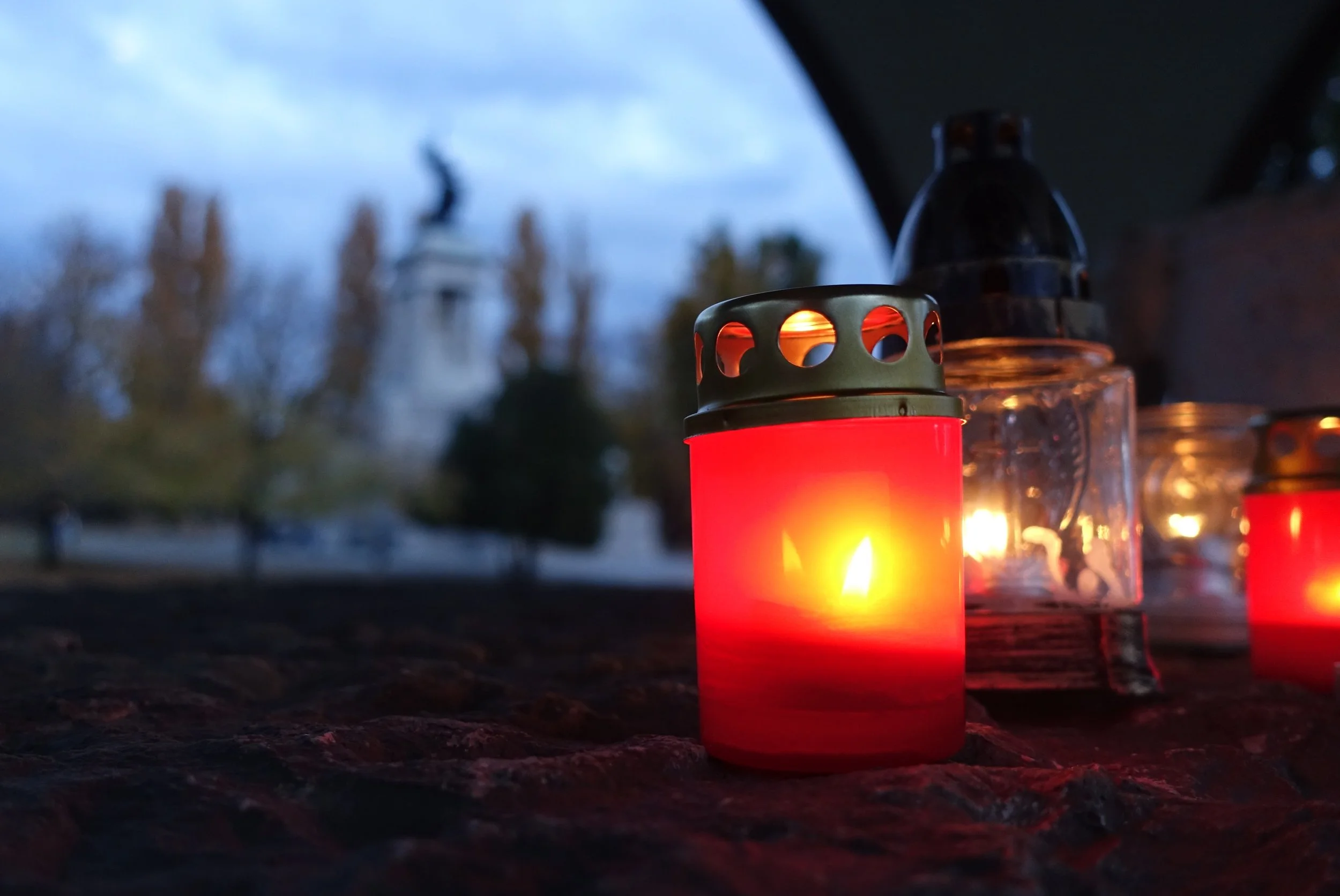
Over this two-day window, Hungarians of all faiths and none will follow long-established rituals. The main task is to visit the graves of deceased family members and tidy their burial plots, removing old vegetation and rubbish gathered over the previous year. New plants are dug in around the dead, and flowers are laid: often evergreen wreaths or chrysanthemums. T lights and candles are left on gravestones to remember individual souls.
People travel widely to visit their hometowns and meet with relatives. Hotels fill up, and parking places near local cemeteries are at a premium. Sometimes extended families co-ordinate to complete the work. Alternatively, they may alternate their annual visits if the deceased are located in different parts of the country. Often the activities happen after the onset of darkness, and mourners will be found working in municipal graveyards through the night. Daytime presentations about famous deceased citizens may take place in the larger cemeteries, accompanied by mournful musical events or light shows around the entrance gates. Hungary is united and at peace with itself on these days of remembering. Halloween celebrations are fleeting and casual in comparison.
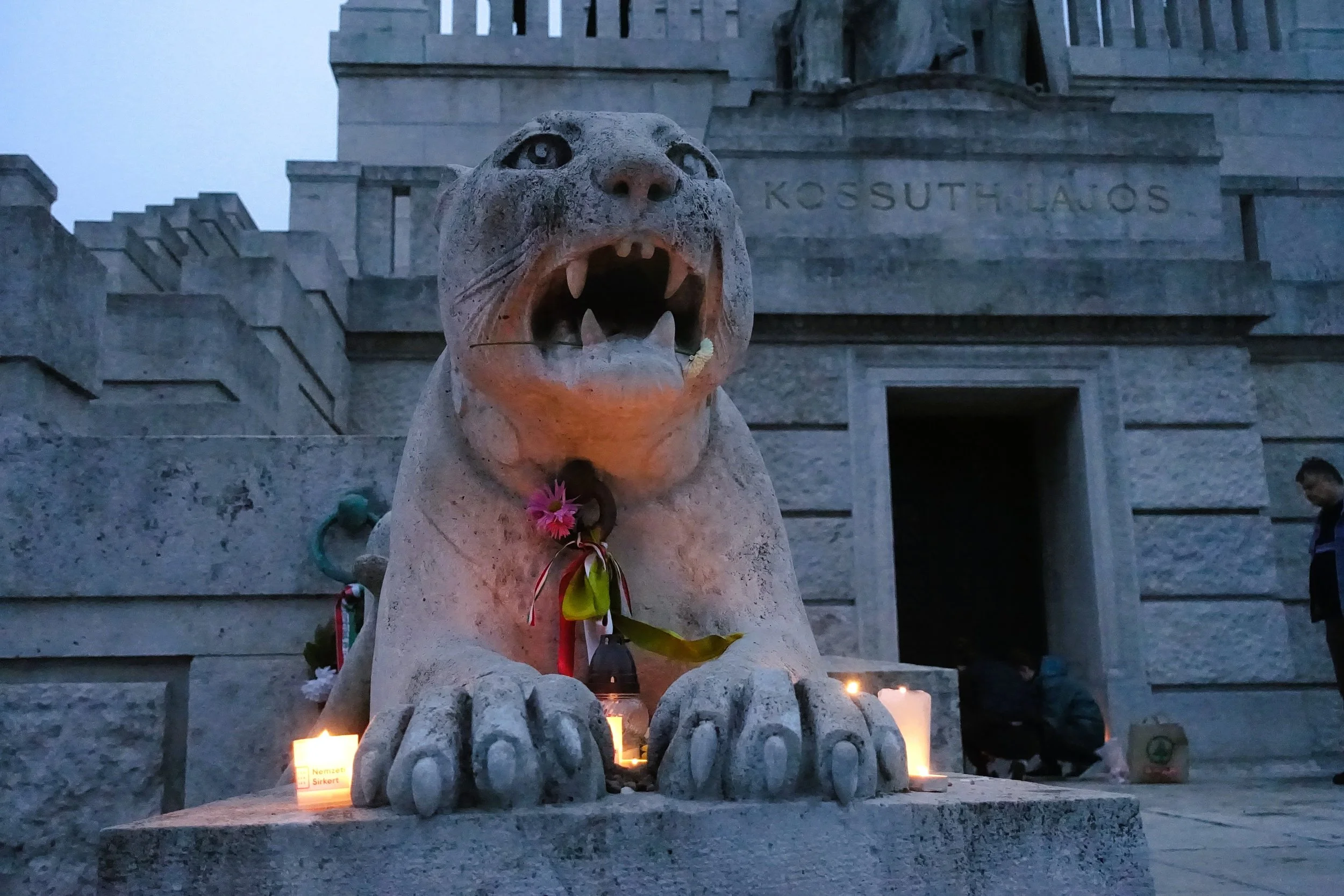
The Kossuth mausoleum with door open to the public.
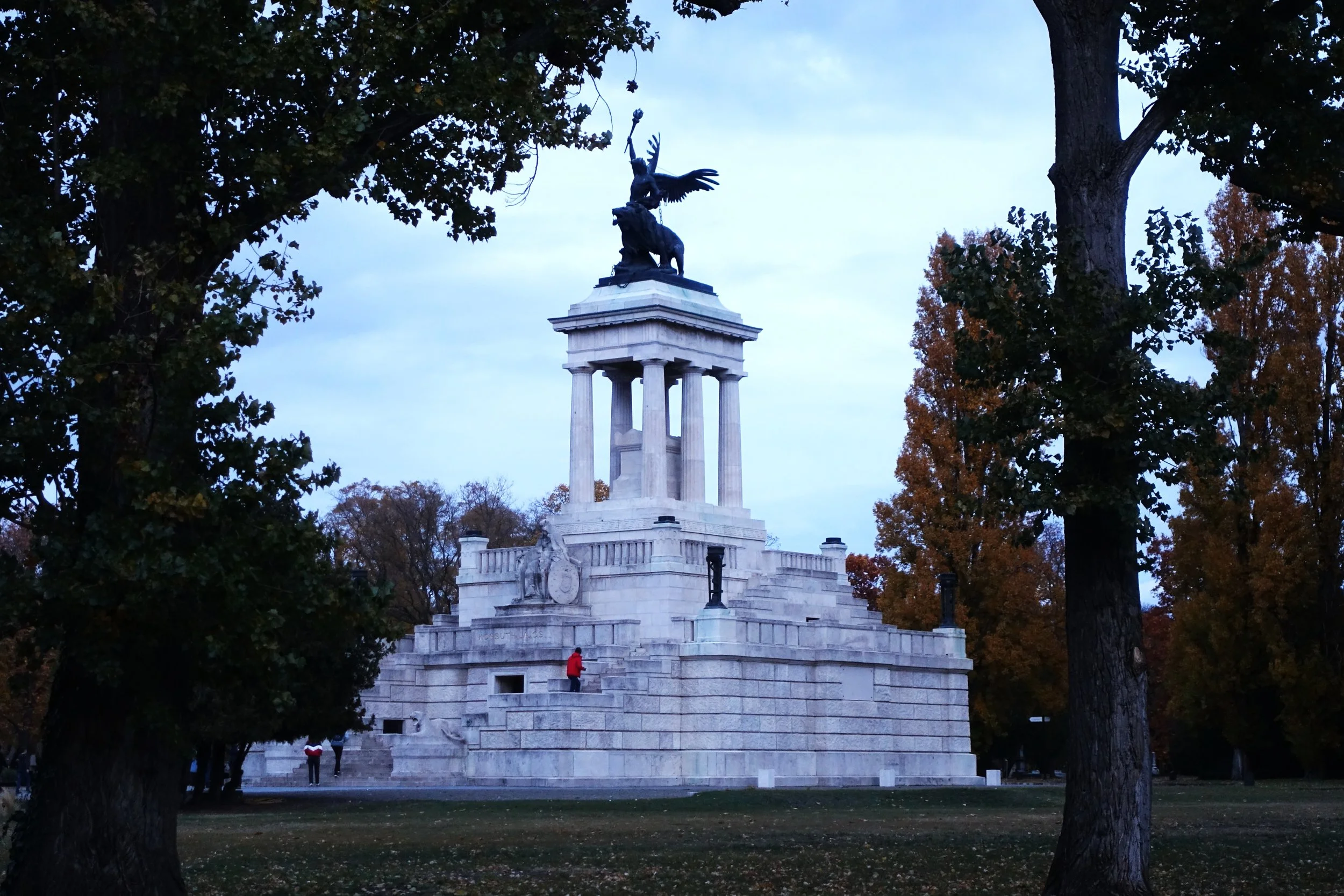
The Kossuth mausoleum.
Most of the country’s famous politicians and statesmen, plus a sprinkling of writers and artists, are buried at Fiume Road National Graveyard in inner Pest. It serves as a vast memorial park and a repository for the nation's history. Most of the people interred here are of some public interest. I watched a band of male musicians in unusual hats play a range of traditional instruments in the late afternoon on All Saints’ Day. They accompanied a group of women singing mournful songs drawn from centuries of Christian belief.
The entrance door to the spectacular mausoleum of Kossuth Lajos, Hungary’s most fervent revolutionary leader of the nineteenth century, was wide open. As were others in the cemetery. Visitors could wander into the marble half-light and examine the coffins and other paraphernalia. More appealing was to climb the steps up to the top of the mausoleum. Looking out over the cemetery, tiny candles in red and orange holders could be seen dotted around haphazardly. Only the real stars of Hungary’s past attracted extra lighting. Most graves and tombs were left dark; plenty of souls were unremembered. Many had died long ago, so there were fewer mourners here than at a normal public cemetery on this day. Beyond the high boundary walls, the tower blocks and tenements of Józsefváros were blurry shapes in the gathering dusk. As though the modern city had retreated in respect for this period of remembrance. The shrill sound of an ambulance siren acted as a desperate reminder of the living world.
I saw a lit area deeper in the cemetery towards the Fiume road wall. Darkness was arriving as I made my way towards it. An elderly woman brushed away vigorously at mounds of leaves around a headstone marked with a communist star. I noticed that there was a ring of such graves, none of which were decorated with flowers or candles. Most of the Soviet generations have passed away now.
The lit area came from a large crypt. I couldn’t find the name of the deceased family, but its door was open, and steps led down into an underground space. There was no one around, so I poked my head inside. Some faint trace of incense in the air failed to overcome the smells of earth and mould. It was all quite creepy. There was no reason to explore further, so I headed back towards the entrance. I wanted to visit another of the city’s large cemeteries before the night arrived in earnest.
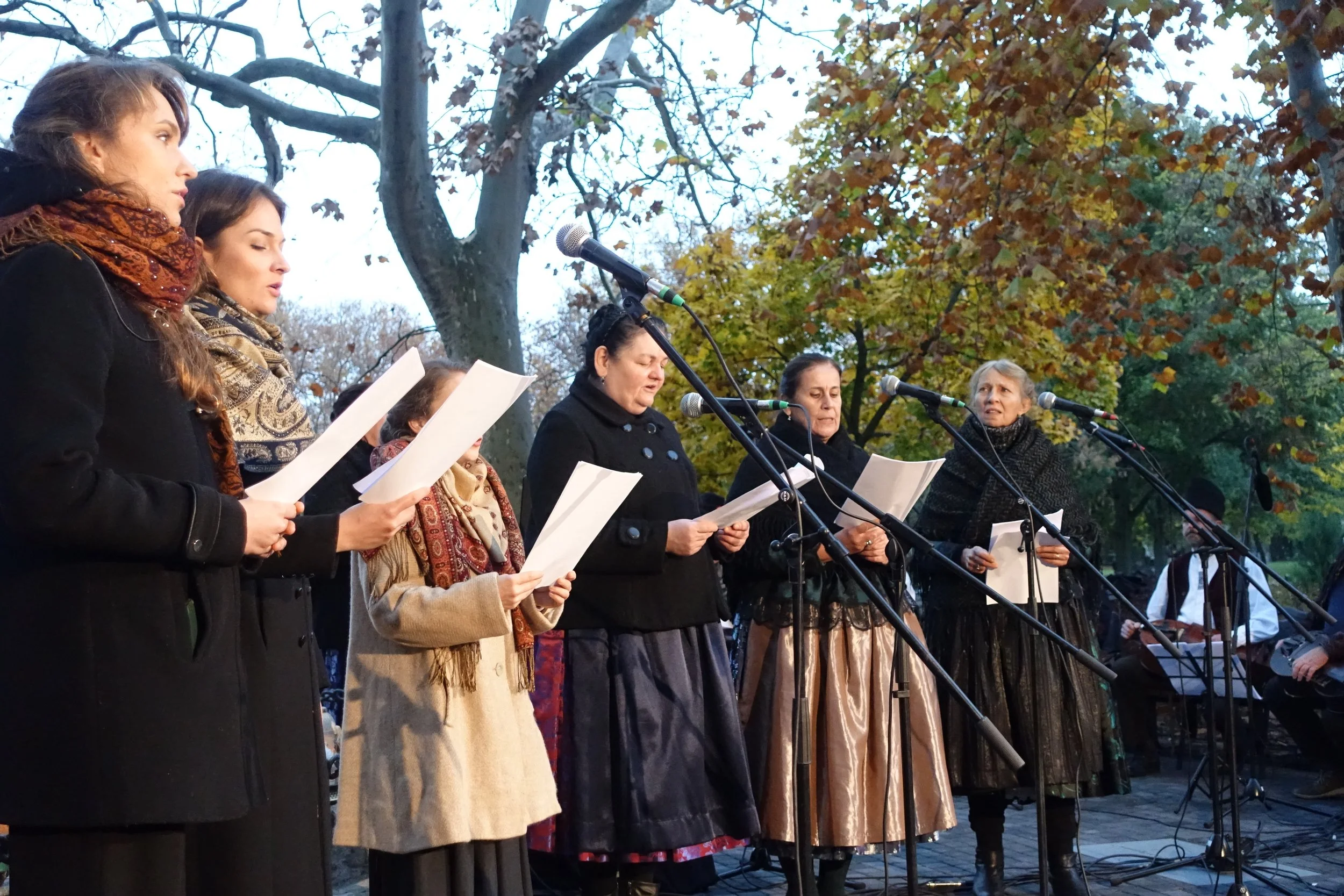
SIngers on All Saints’ Day at Fiume cemetery.
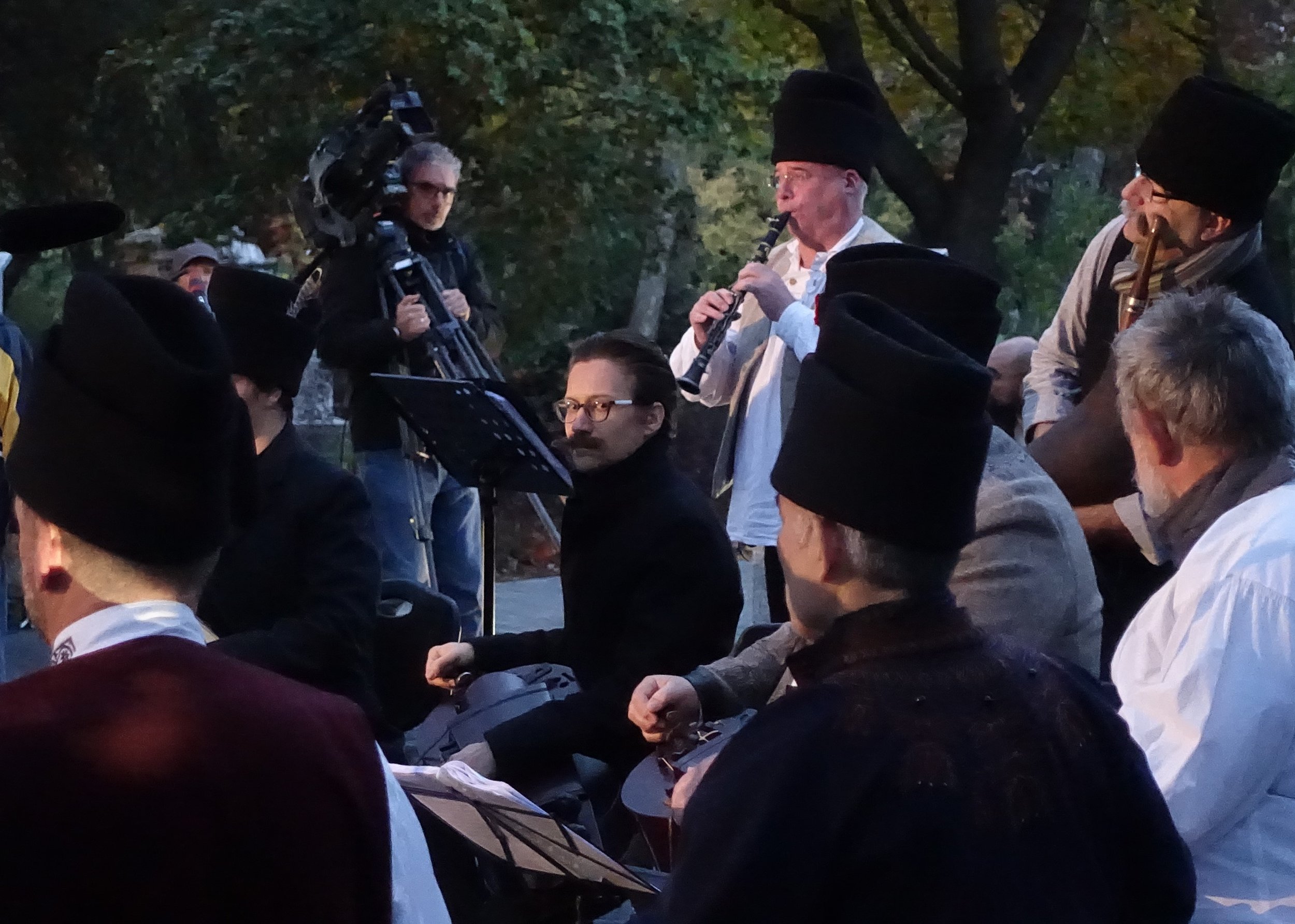
Musicians on All Saints’ Day at Fiume cemetery.
On the number 23 tram it took me a couple of stops to realise that the automated voice recording, calling out the names of approaching stations, was out of sync with the places of arrival. Normally busy, Orczy tér had become a ghost platform where nobody climbed on board. At the stop claiming to be Golgota, there was a crowd of waiting passengers. A shaven-skulled, homeless man dithered on the tram steps, stuck in his own version of purgatory, delaying our departure, then finally remaining at the station.
The tram took a large loop around the inner city, offering little to see in the early evening until we reached the Danube. Flickering lanterns cascaded down the Gellért hillside, connecting floodlit statues into the shape of a raven’s back. The castle district became a city above a city, glowing goldly: heavenlike. The Matthias Church punctured faded pink clouds with its spire; those memories of the dusk that had already passed. The tram paused underground in a graffiti-ridden vault while the automation confusingly announced our arrival at Vigadó tér. Hurtling up to ground level, I saw the side of a florist’s shop adorned in chrysanthemums. I got off at the next stop and tried to work out the rest of my journey.
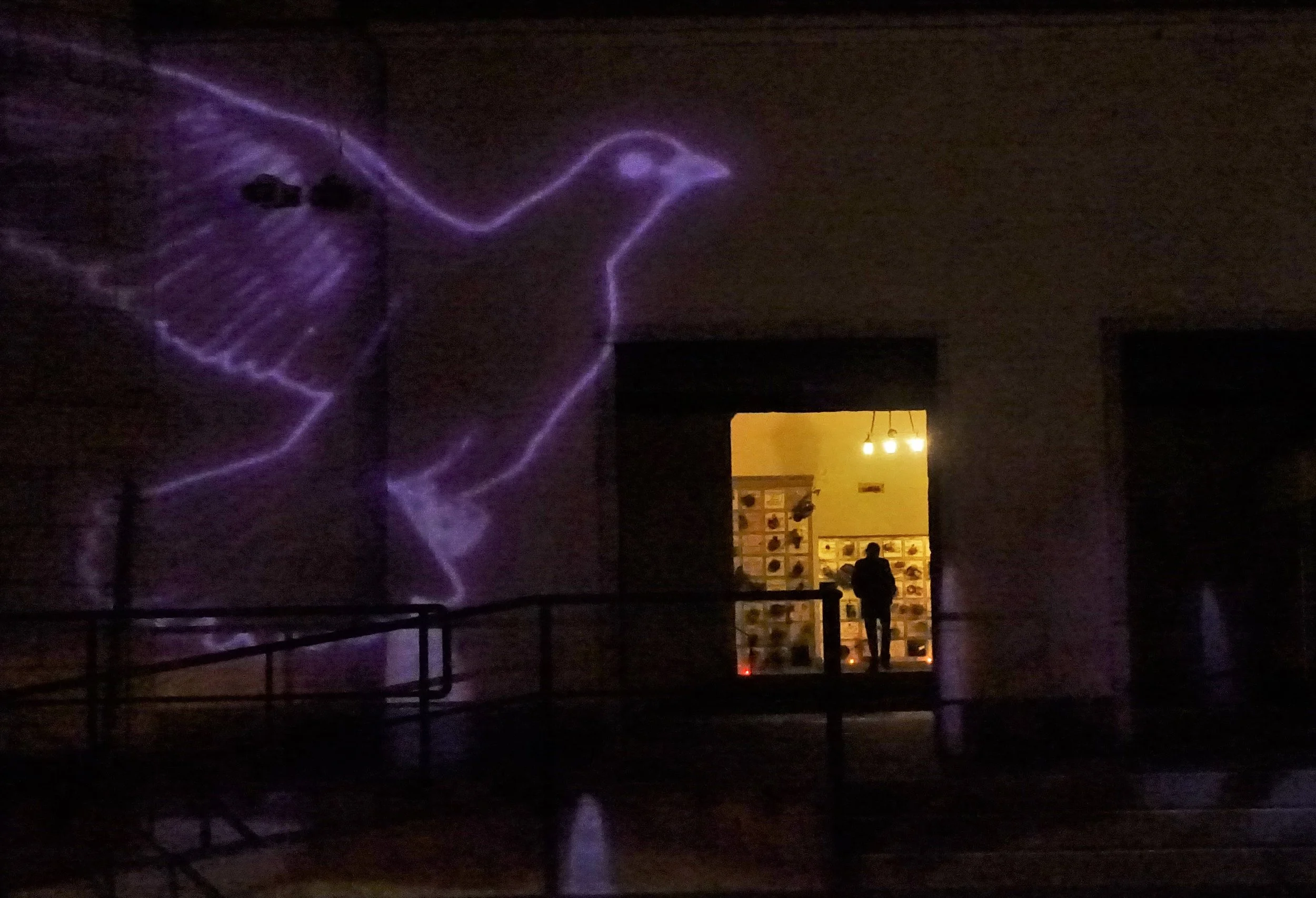
Dove projection on crypt at Farkasréti cemetery.
I travelled on the 8E bus as far as the tram terminal high in Buda. The side entrance into Farkasréti Cemetery was just an unmarked gate past brightly lit flower stalls. Darkness immediately surrounded me, and it was cooler among the graves than in the heart of Pest. The night felt unnatural and premature. There was no lighting to guide one’s passage. Scatterings of candles flickered around the graves, and a steady procession of people found their way with mobile phone torches. This vast cemetery inters many of Hungary’s most famous artists and musicians alongside thousands of lesser-known citizens. If Fiume is like a park, then Farkasréti is more like a large wood on the side of a steep hill and has a natural and intimate atmosphere. You feel closer to the departed. During the siege of Budapest in 1945, German and Russian troops fought among the graves. Some headstones remain scarred with bullet marks.
It was easy to get lost on this Buda hillside. I thought I knew my way down to the main entrance. Despite my phone torch, I was soon lost on a side path and only guided in the darkness by the groaning brakes of the number 59 tram navigating the steep tracks around the edge of the cemetery. My uncertainty grew, and on reaching a high wall, I half convinced myself that I had somehow managed to bypass the entrance to reach the far boundary. The sound of the tram offered reassurance that I wasn’t so far off my planned route. Although the evening was actually mild, a cold shiver stirred me into pulling my jacket up higher. One day such a place will be my home too.
Only narrow gaps in the wall revealed the normal November evening beyond. Streetlights made the tram tracks shine like a passageway to the stars. Leaves were thick underfoot as I wandered around a crumbling crypt and banks of containers supporting urns of ash. Only a couple had candles inside, dispersing small patches of light. The cremated souls receive less attention here than those interred underground.
I passed mourners almost invisible in the gloom and turned a corner that led onto a wider path, where the public sauntered in greater numbers. Wheelchairs and prams were pushed on the smoother surface, and the route took me down to the main entrance. A crowd gathered with flowers and candles. Some had finished their tidying and planting of new greenery. They dispensed of unwanted vegetation in rubbish bins piled high. Others lit up candles to place in huge racks just inside the grand gates. Young children bent down to put tea lights on the ground, immortalising relatives they may never have met. There was a gentle buzz of conversation in the air. Even the spooky projections of birds over the cemetery buildings failed to bring the mood down. The ambience was warm and solemn but not sad.

Massed remembrance at Farkasréti cemetery
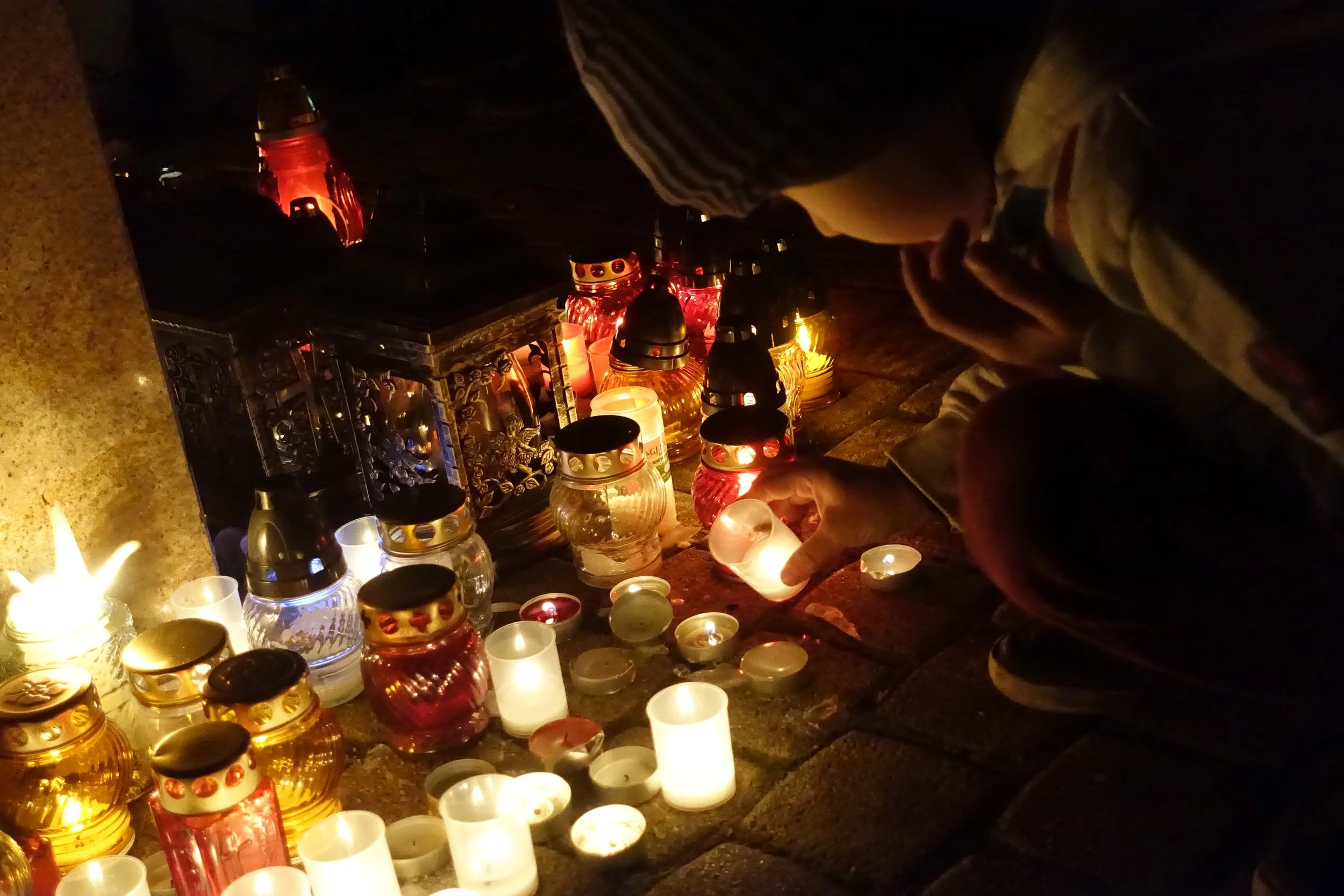
Boy adds candle to remembrance at Farkasréti cemetery.
I climbed aboard a rickety number 59 tram which scuttled down towards the centre of Buda. The tram was packed, echoing with far more conversation than normal. There was a lively banter between extended family members. A man wearing aviator-style spectacles smiled inwardly as though satisfied that he had carried out his duties well. A woman in a spotted headscarf watched her reflection in the window as the tram navigated a steep turn. The tired brakes on the ancient vehicle did their utmost to keep the mourners safe. The woman adjusted her pose to improve the image and seemed to like what she saw in her reflection. She smiled back at the glass just in front of the cemetery wall. Maybe she was really smiling at the memory of those she had just visited? The ones she will eventually join. Perhaps her expression was of a higher order than mere vanity?
At the next crunching bend, a grandmother and grandchild tumbled onto other passengers, who greeted them with a smile and kept them upright. The fifty-nine pulled up almost immediately at a stop. When I looked forward again, the woman in the spotted headscarf had departed. By the time we reached the southern railway terminus, the tram was silent. The day’s good will had been gently dispersed by the mundane business of reaching home. Passengers journeyed on alone in their thoughts, towards frosty days to come and winter nights that will eventually chill us no more. Mortality had temporarily united the soul of the nation, but as my namesake George once wrote, 'All Things Must Pass'.