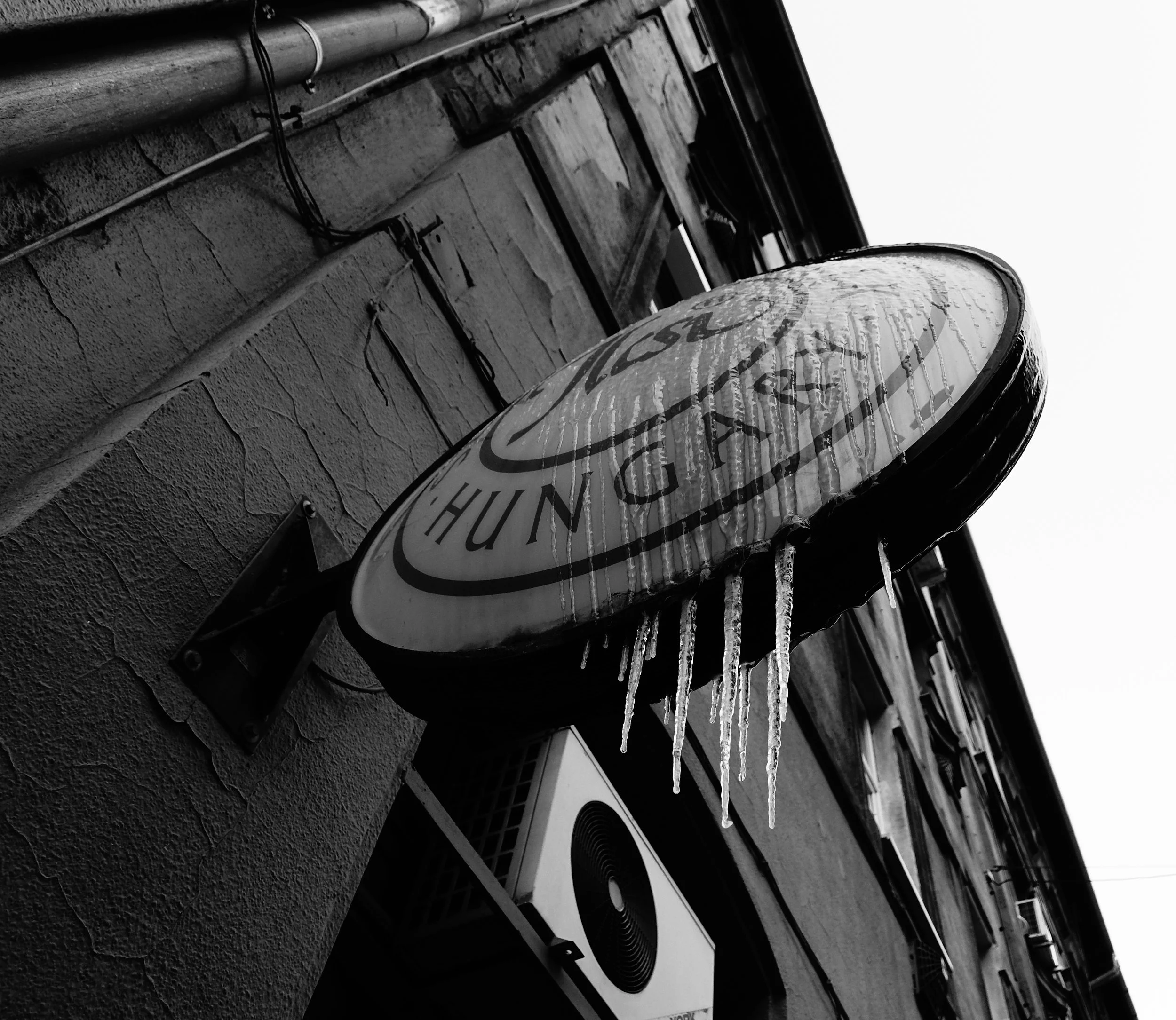
Icicles in the thirteenth district
This has been my first ‘real’ winter in Hungary. I mean one which resembles a scene in a Cold War movie with snow piled high on the side of roads. The Bükk mountains saw a nighttime temperature of -31° Celsius recorded in mid-January. Temperatures at night in Budapest have gone down to a mere -12°C. The half foot of snow which fell in intervals from New Year’s Eve has remained frozen on the ground. Some days, temperatures haven’t risen above -4°C, and like most Januarys, there’s precious little sun to help melt the snow or rain to wash it away.
Still, life has continued without any major disturbances. People keep working, and kids attend school regularly. Public transport is occasionally late but rarely cancelled by the weather. Snow tyres are not compulsory in Hungary but are widely used, so the roads are as busy as normal. And just as with extreme heat in summer, people hardly mention the weather here. Unlike the UK, it doesn’t become a basis for social bonding. It’s simply a matter of fact. Something to get on with while you think and talk about more important things. There’s a winter break in the football season, so even sports fans don’t have cancellations to complain about.
In the days after the heaviest falls, ancient sledges appeared in the local park. They are the property of parents and grandparents because there hasn’t been a winter here like this for at least a decade. Children sledge down the steeper slopes while dogs charge around happily. Some younger pets have hardly seen snow before. And reports of wild boar in the city continue. Apparently, they have been coming down from the nature reserve to our very street. Strange, because there are only ice cakes to eat here.
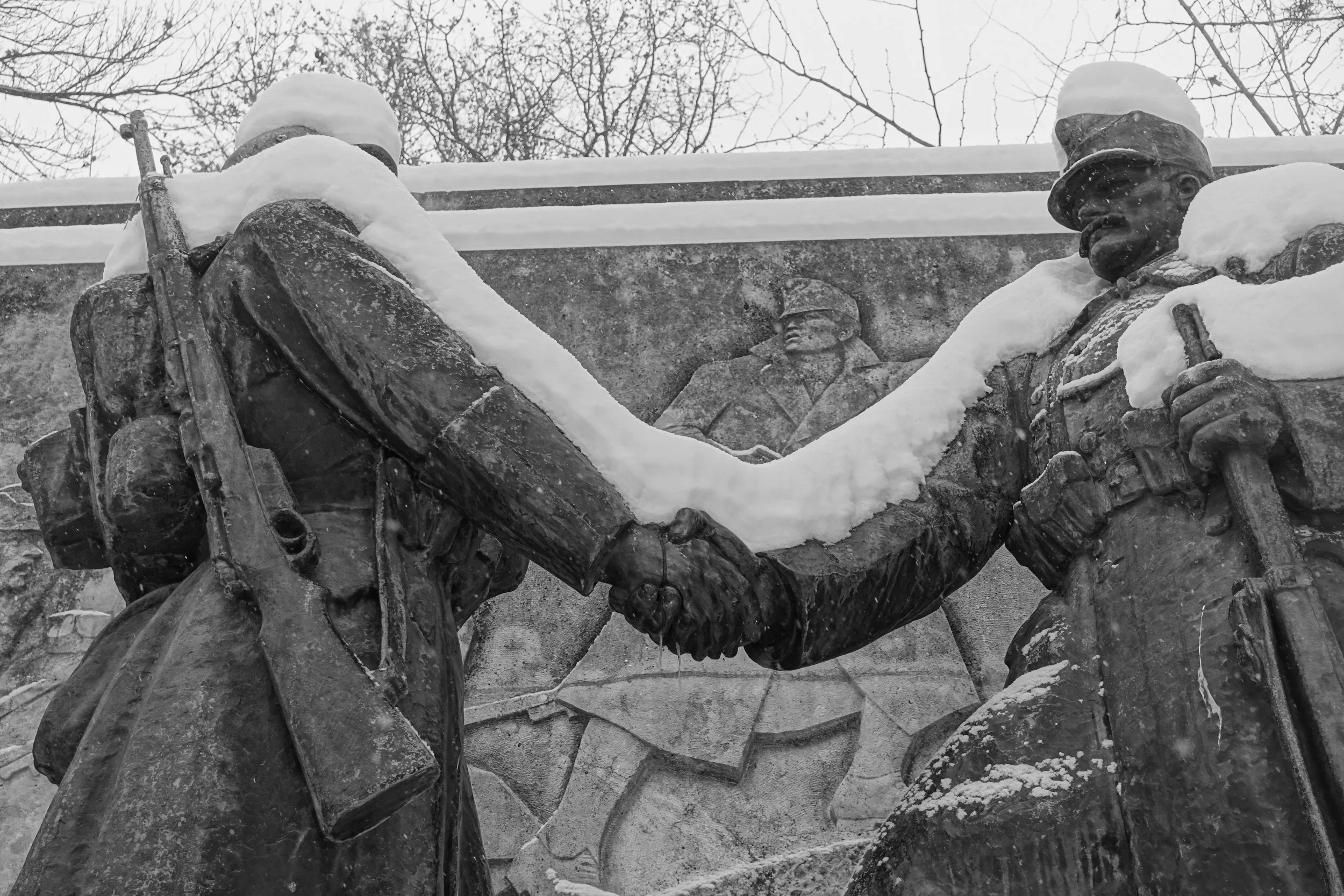
First World War memorial - Városmajor park.
When the snow first fell, the Castle district became even more atmospheric than usual. You could say quaint and romantic. Neither would have been the case in January 1945. The second longest siege of World War Two took place here under even harsher winter conditions. Life would have been hellish in every way for local residents as the fighting closed in. In neighbouring Ukraine, of course, it’s a similar story now. Russian forces are attempting to freeze the country into submission. In 1945 the Soviets came to Hungary as liberators but ended up staying for over forty years, rebuilding the Castle District they so emphatically destroyed while surrounding Hitler’s forces. Now the major complaint would be that supermarkets stopped doing home deliveries for a period at the start of the month. And the shelves were a little short of fresh fish at times.
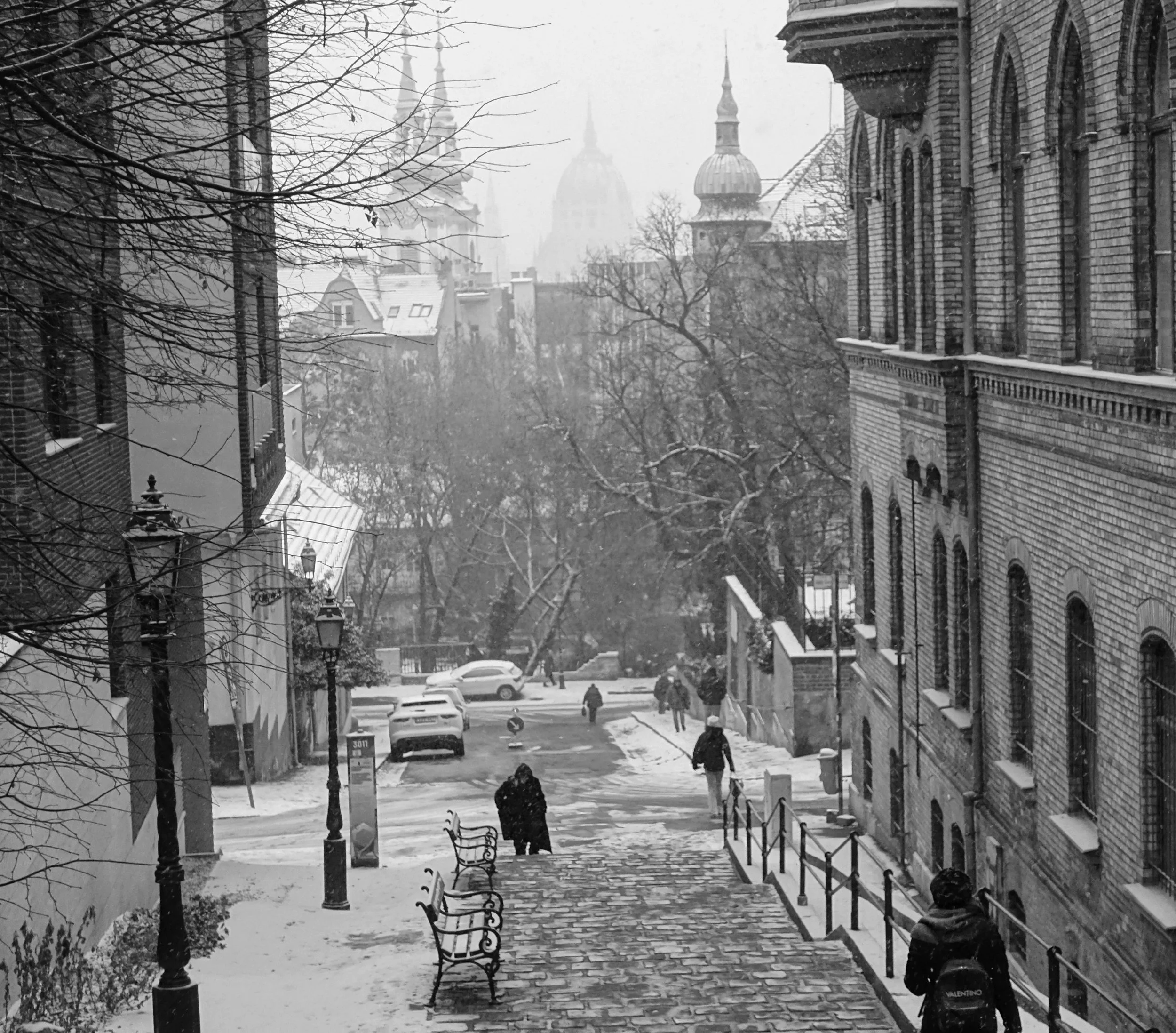
Just below the Castle District
The main invaders in recent years are tourists, and lower January prices have kept their numbers up. Foreign visitors continue to view the main attractions regardless of the weather. On an afternoon of freezing fog, a Spanish group strolled around the Parliament building, huddling close for warmth or fear of becoming separated in the gloom. In this real pea souper visibility had deteriorated by dusk. I was out for too long and could feel a coating of icy moisture on my cheeks.
The Pest side of the river becomes particularly imposing during bad weather. Traces of the present quickly fade away during a whiteout or pea souper, leaving the nineteenth-century buildings looking more ornate, even as they become more indistinct. It’s like being transported back in time to 1900, when Budapest was one of the fastest-growing cities in the world. The shared centre (with Vienna) of a huge empire, rather than the capital city of a small EU country.
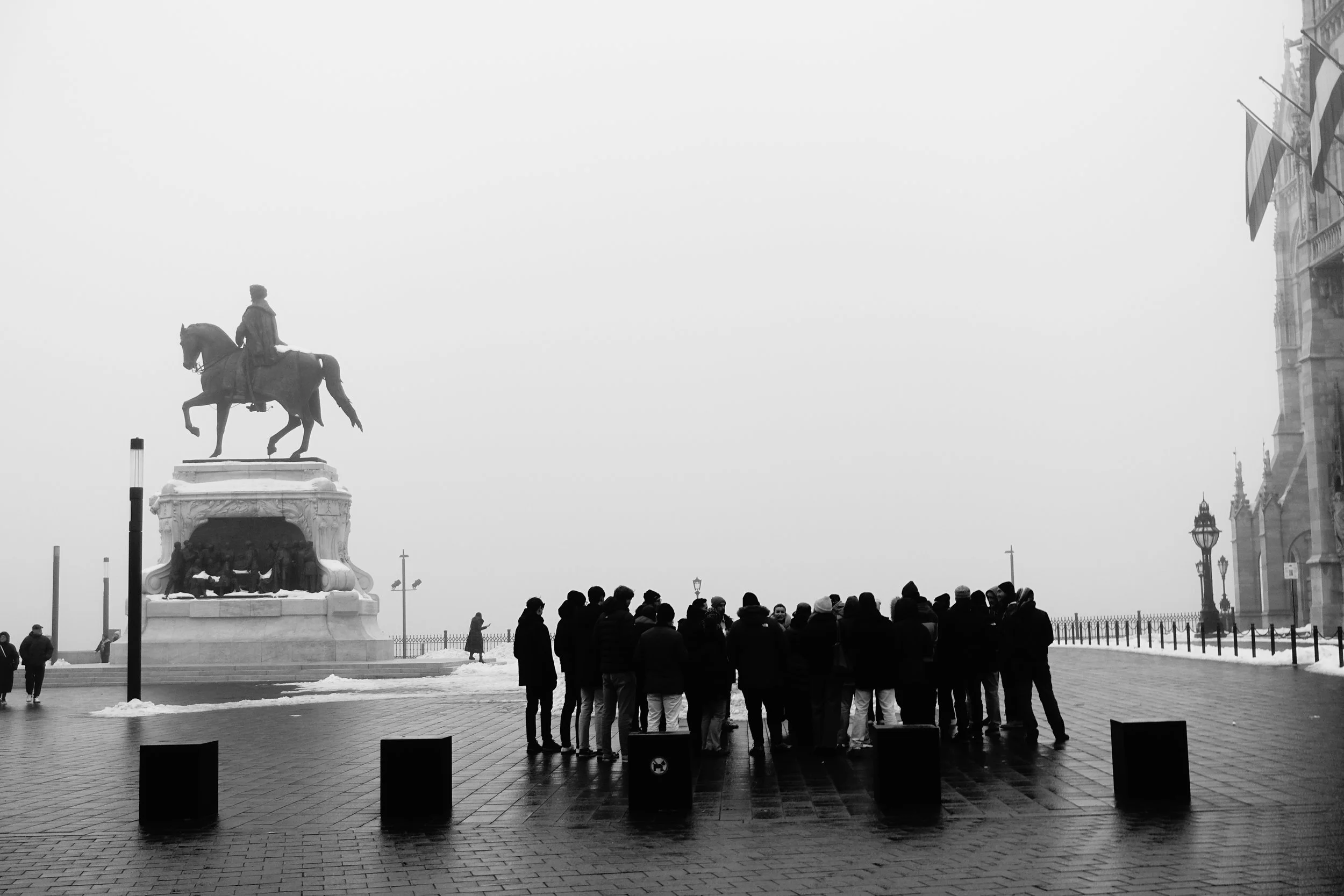
Near the Parliament.
Ice floes in the Danube were a surprise to me, as I didn’t think it had got that cold. There are ominous memories of icy weather here. The winter of 1837-38 was especially cold, with the Danube almost frozen down to its bed. In early March 1838, a sudden warming in the western catchment areas caused rapid snowmelt, sending a massive volume of water and ice downstream towards Budapest. On March 13th a 4–5-metre-high ice wall just to the city’s south blocked the river's flow, causing the floodwater to escape into the built-up areas to the east. Parts of Pest were submerged under two and a half metres of water for several days. 153 people died, and about fifty thousand others were left homeless. Afterwards, Pest was rebuilt approximately three and a half metres higher to allow for future calamities. So far so good: there has been no repeat of the 1838 disaster.
Early(ish) on a Wednesday morning, the normally lively banksides were almost deserted. I could have been in the middle of the countryside. The only ships on the water were lengthy goods transporters, competing with the ice heading south towards Serbia and the Balkans. I wondered if the ice had formed in Hungary or upstream in Slovakia or Austria and if it would melt before being deposited in the Black Sea, a thousand miles to the southeast. The temperature only reached minus 3°C that day, and after a couple of hours’ walking, I felt the chill in my very bones. I needed hot tea and mulled wine to revive myself.
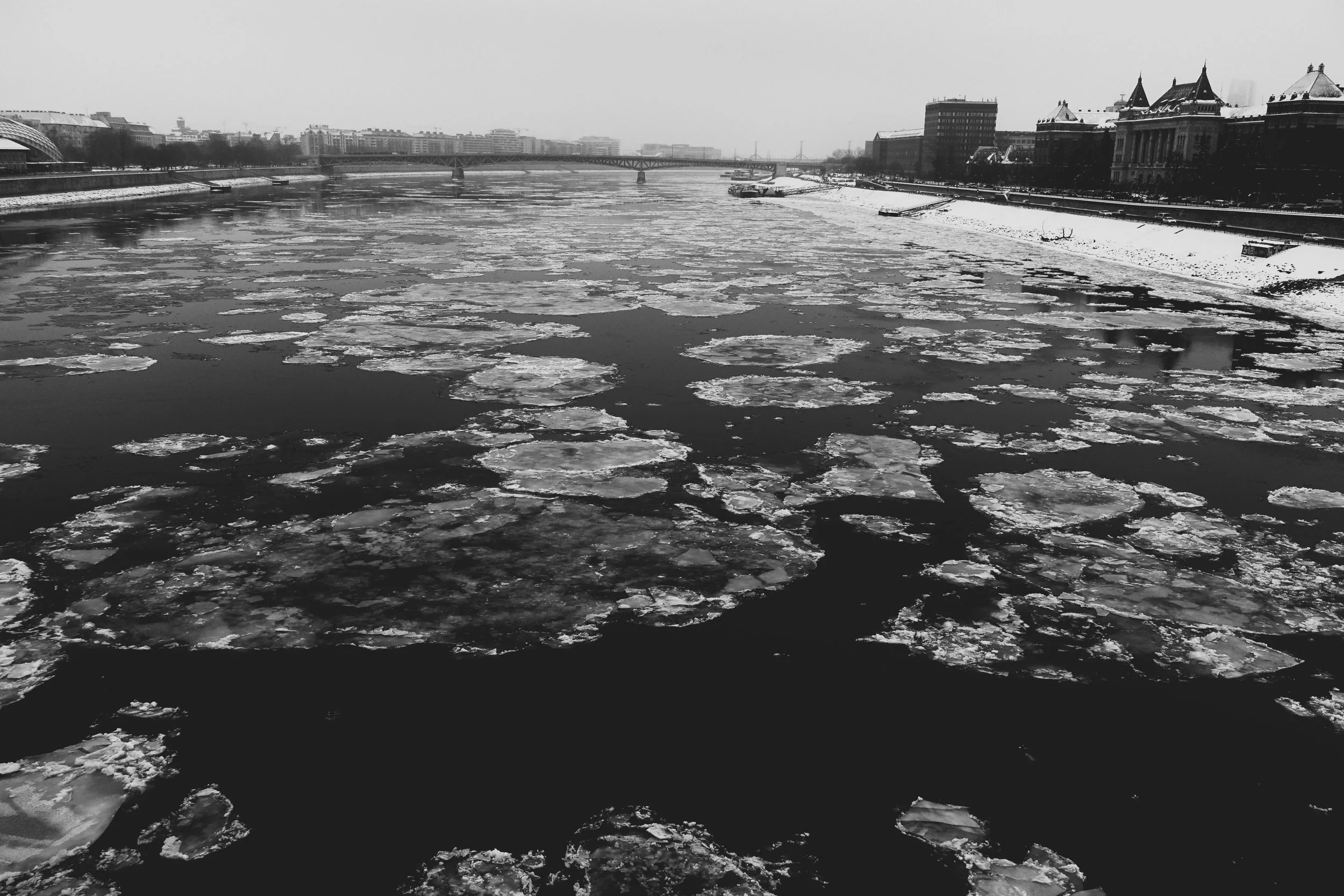
Ice floes
On Margaret Island the flocks of hooded crows seemed more animated at roosting time than normal. They descended on a playing pitch where the snow was less deep and searched frantically for worms or other creatures. After a brief thaw the day before, plunging overnight temperatures had left trails of black ice on the running track. I found myself skidding as I walked gingerly along. Fewer runners were present than normal, but they were able to glide over the icy sections as though they weren’t there. I wished I was young enough to run over ice too. Then I remembered that when I was young, I ended up flat on my back on more than one occasion. And that was just walking!
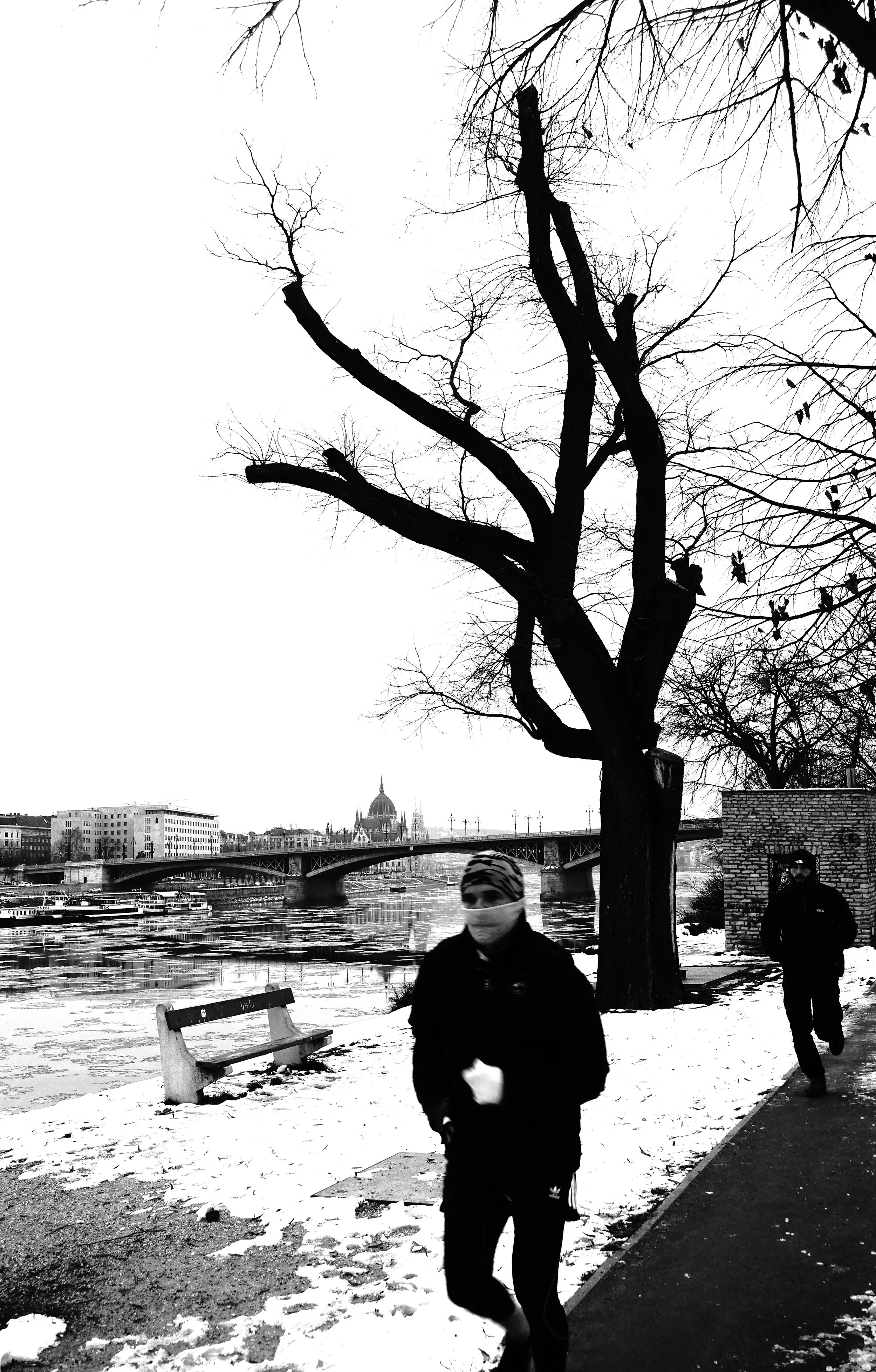
Runners-Margaret island
At the City Park, half of the boating lake has, as usual, been artificially frozen over to create a large ice-skating rink. As though they needed to bother! Huge piles of snow were pushed to the side to leave the ice perfectly smooth. On a bitterly cold afternoon there were few skaters present. Further along, the fountain of another lake seemed to be distributing warm water, possibly an outflow from the nearby Széchenyi thermal baths, leaving clouds of mist hanging over the surface. Closer to home, there was a professionally cut hole in the ice at the Millenáris ornamental pool, allowing oxygen to reach the shoal of large goldfish who swim there around the year.
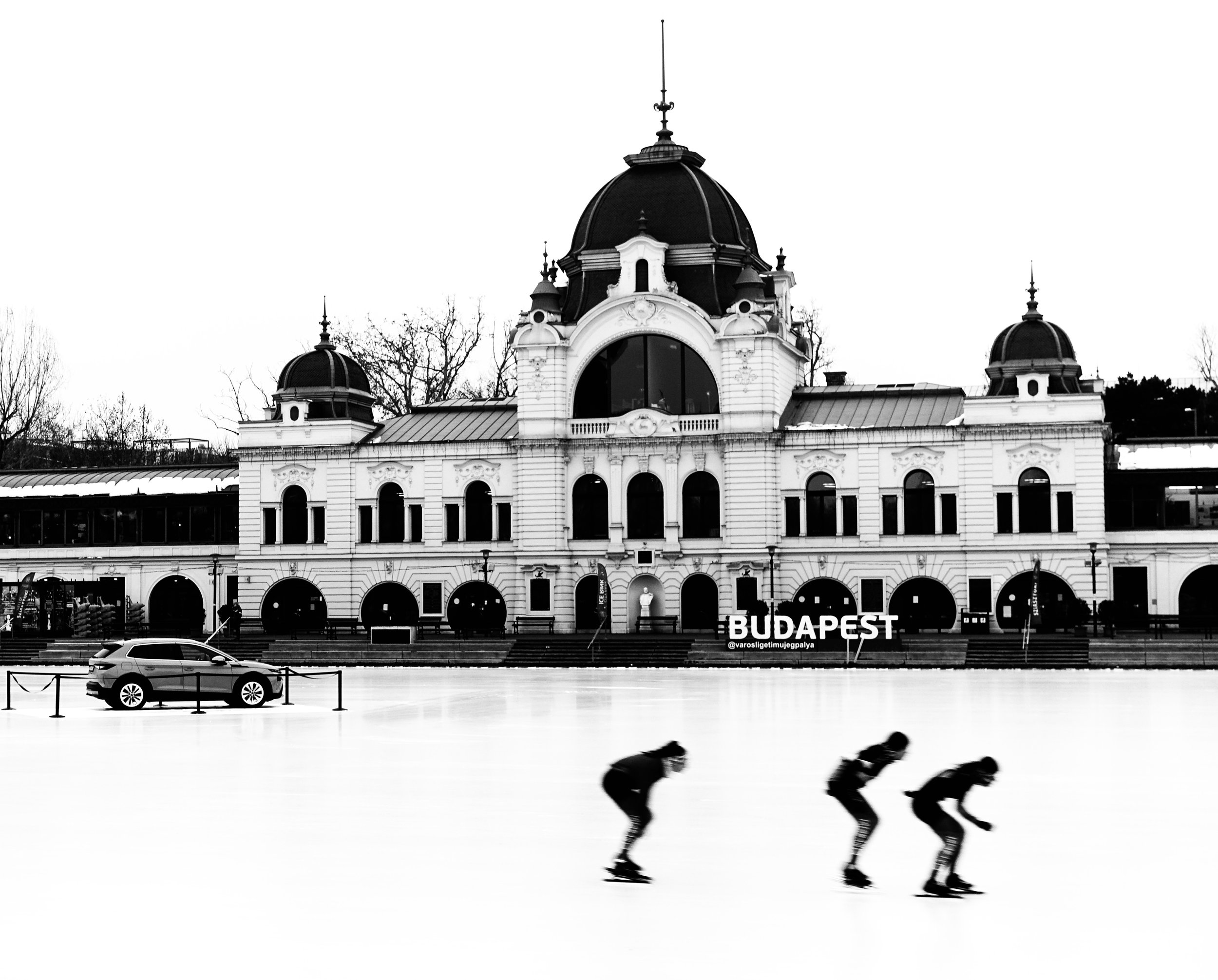
Skating lake at the City Park
Did we have winters like this during my childhood in England? I remember being young enough to be escorted back from primary school by my mum with piles of snow along the pavements. Near the Star Stores sweet shop, the mums and children waited to cross busy Stockingstone Road. A lorry rushed through a kerbside pool of slush, splashing my schoolmate Francis from head to foot in icy water. It was the last we saw of him that winter. He only returned to school when the days grew longer again. A wise hibernation if that winter was as cold and prolonged as this one here in Central Europe. I doubt it was somehow. Frani was never much of a schoolgoer!
I keep waiting for the ice to melt in earnest. For the nearby park to thaw out and the dogs to charge around as normal. I’m ready for the young dogs to become slush puppies and then for the colour green to be visible to the eye again.
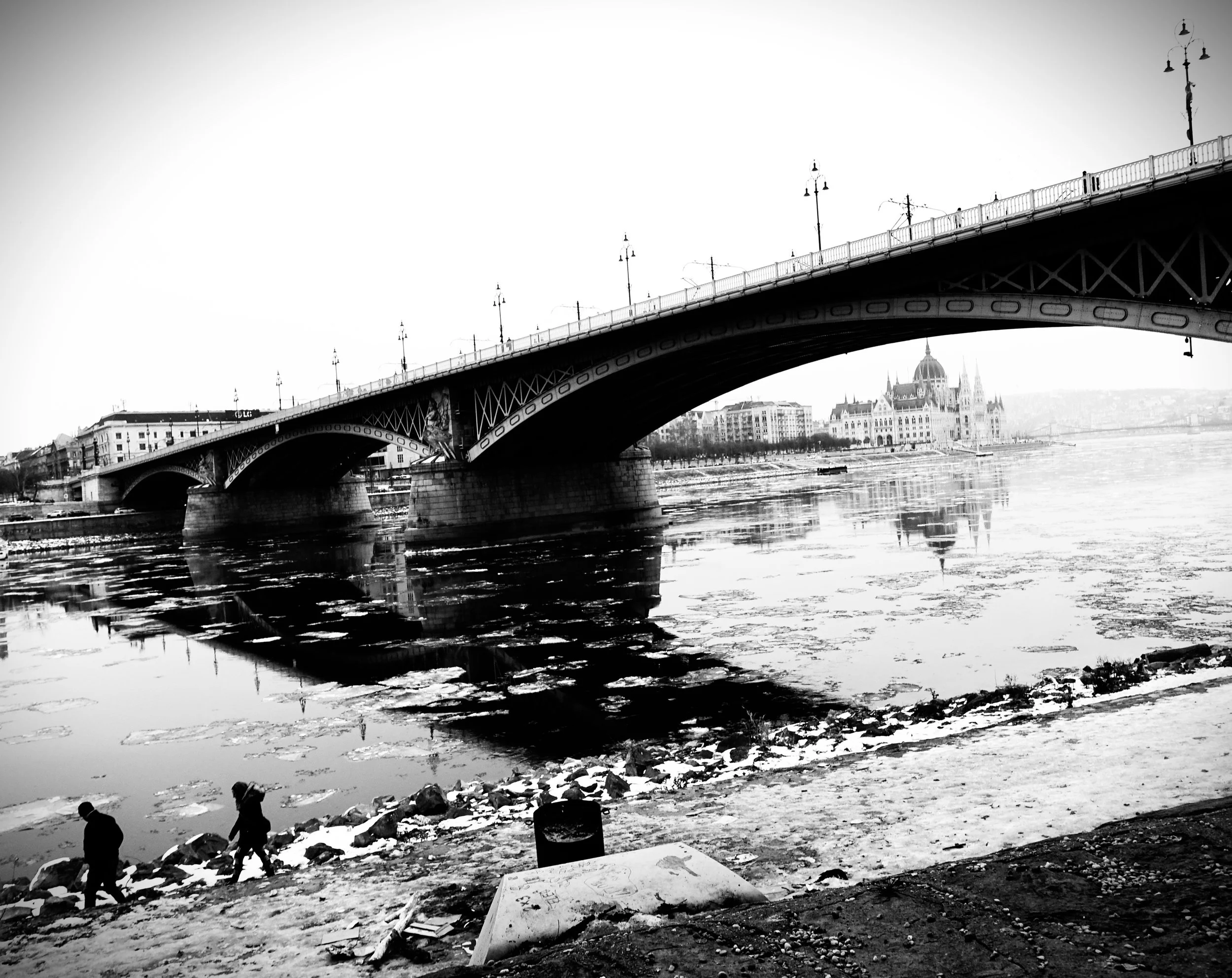
Margaret Bridge