Summertime- ‘and the livin' is easy’

Dual time clock on Bristol Corn Exchange-photo by Rick Crowley (unchanged) https://creativecommons.org/licenses/by-sa/2.0/
Our holiday started with a day wandering around Bristol. The timer on the toaster in the quiet café near the university ticked surprisingly loudly. All the action was outside in the blazing sunshine as the graduands trickled into the Wills Memorial Building. An hour or so later they emerged joyously as graduates. I remembered the lack of employment opportunities for young people in the UK and hoped their working lives would be lengthy and rewarding. Even for an educated elite, in the age of AI and relentless change, it’s difficult to predict what their future holds. Time seems to be racing for us all, but particularly for Generation Z and those who will come afterwards. Long might they afford their avocado toast with its nutritional benefits. Long might a human hand insert bread into the machine and butter it all over. Not that that’s a graduate-level job…not yet, anyway!
The fresh graduates and their families take pictures of one another in the old city. The clock above them on the Corn Exchange has two minute hands. The black one shows Bristol time, locally agreed for many centuries before the clock was installed in 1822. The red hand shows Greenwich Meantime and is just over ten minutes ahead. It was added to the clock thirty years later. The expansion of the railways was the main reason for standardisation. Bristol successfully maintained its own time measure for five years after the national introduction of GMT. After travelling on British Rail during this trip and rarely encountering a punctual arrival, the red hand feels like a waste of time.
Time is never wasted at the seaside. Land meets sea. You have to slow down. Which is just as well for the senior residents of East Devon as the big hand moves too quickly. But as any barroom philosopher will tell you, time is a movable feast. While facing many career changes ahead, the summer hours of new graduates looking for work could drag endlessly. Time’s arrow caught in suspended animation.
There’s a bubbly atmosphere in the streets and cafes of the charming Victorian resort of Sidmouth. Life begins at sixty, seventy, eighty or whenever you move here. Or just visit. During the endless summer of 2026 with its sunny days and sea-cooled nights, Sidmouth feels like the perfect place to be. England at its most bucolic.
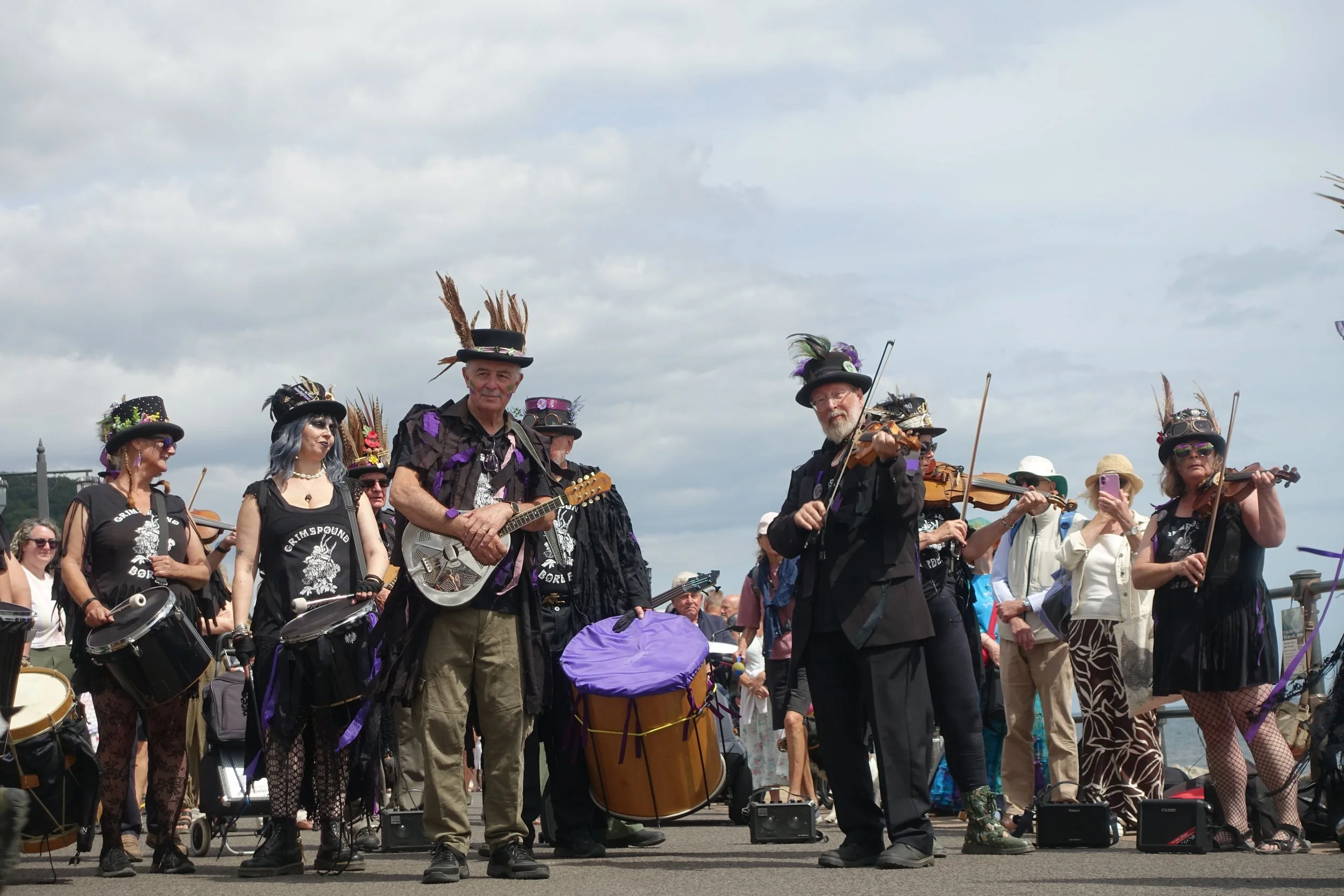
Sidmouth Folk Festival performers.
Residents of all ages dress up to take part in the annual Folk Festival. Many wear costumes or headwear containing feathers. I wondered if they were protesting about the town’s criminal fraternity, those white muggers from the sky who plague Britain's coast: the rapacious seagulls. Mrs Harrison’s honeycomb and stem ginger ice cream was removed by a large gull, balancing momentarily on her head to pluck it deftly away. In the garden area at the rear of the Anchor pub, small groups of raiders perched atop the pergolas, waiting for diners to drop their guard for just a second. Any movement away from one’s dinner may have resulted in a tasty piece of haddock disappearing into the sky. Only the noise and excitement of the festival drove most of the flock away. Time to plan their next foray or move along the coast to screech elsewhere.
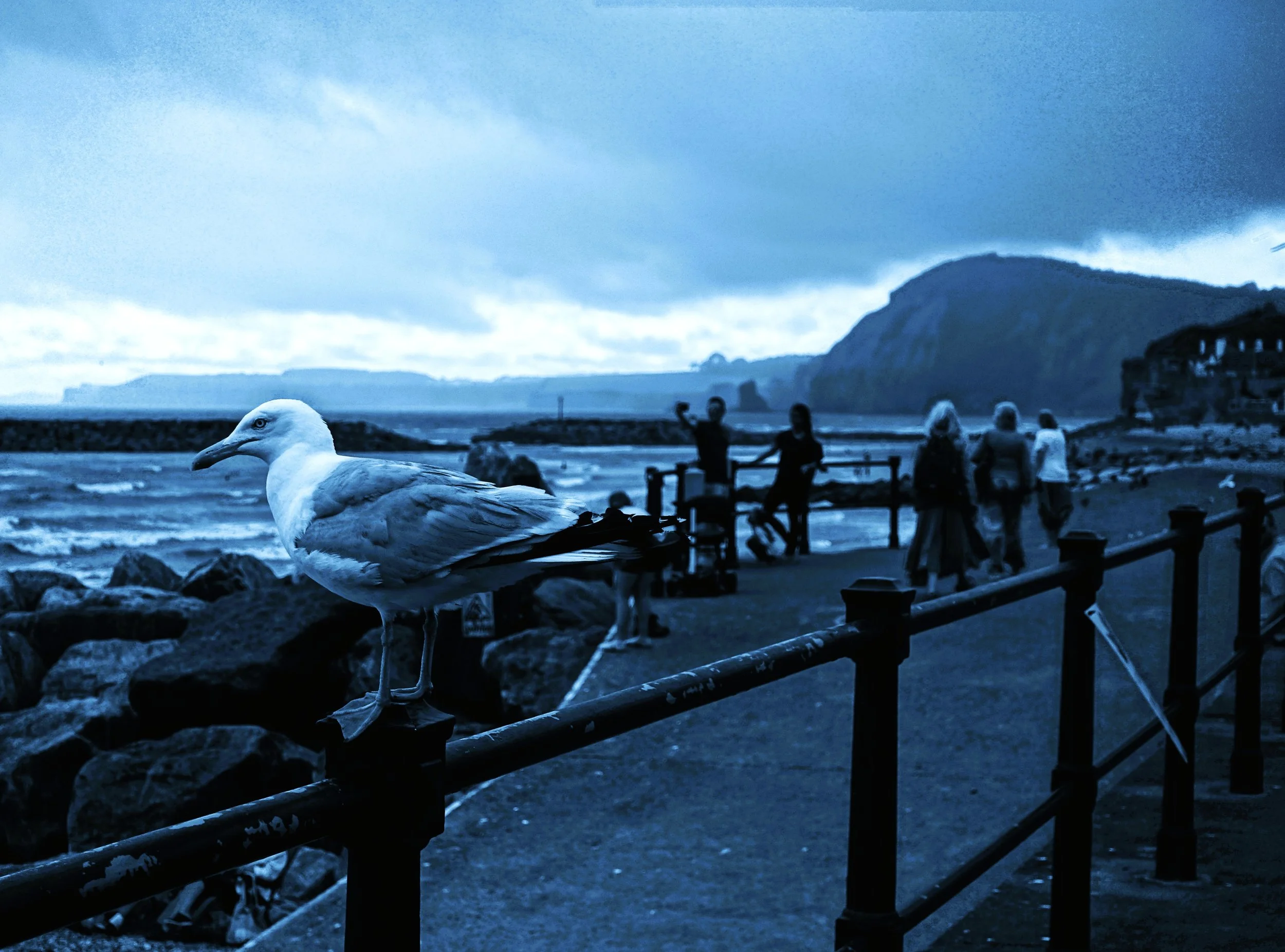
Sidmouth Seafront.
In nearby Honiton the past is remembered in a curious style. ‘Hot Pennies’ is an eight-hundred-year-old tradition. Honiton was granted a royal charter to hold a weekly market during the thirteenth century. Wealthy residents celebrated this annually by throwing baked hot pennies down to the peasants waiting in the streets below, taking great pleasure in seeing them burn their fingers as they tried to gather them. Charity didn’t so much begin at home as in the oven. Peasants served on toast. It reminds me that harking back to things past isn’t always a great idea. The Middle Ages were a different country and most people in Europe live in a better place now.
The pennies aren’t baked any longer, and the collectors are mostly children celebrating the start of the school holidays. The town crier still calls out the traditional amnesty that marked the occasion, allowing all, including debtors, to attend the market. " No man or woman may be arrested so long as this glove is up." In which case, new British graduates often with debts exceeding £50,000 are welcomed at the event. The procession of children and parents moves up and down the High Street, attending different premises from which the pennies are thrown. A mother comments that last year her daughter gathered five pounds from the pavements. Nice work if you can get it.
Honiton Museum is a wonderful quirky place celebrating the town’s lace industry. Among the many unlikely items on display was the locally made, red night dress belonging to Wallace Simpson. An inclusion that would have been considered unsuitable during the abdication crisis of 1936 when King Edward VIII abandoned the throne to marry the twice divorced American woman. Like ‘Hot Pennies’, royal controversy has continued into the twenty-first century, even if society is generally more liberal-minded about divorce.

‘Hot Pennies’ Honiton.
Back in Sidmouth at our temporary residence, the sounds of the past resonated in the suburbs. The babble of family fun and games drifting over garden fences felt eternal. Traditional England is alive and well here. Only the lawns were so stricken that they resembled the colour of crumble mix. Granny Smith’s fell prematurely from the heat and drought stressed apple trees. Sea Gulls swooped down like white Stuka bombers each evening to enjoy their sweet-sour taste. Wood pigeons cooed reassuringly from the telegraph poles like they always have. England has become a brown and pleasant land.
In our Dada-inspired house the past, present and future collide in a visual cacophony. This is a traditional family home with a layer of intrigue and magic added on top. Eyes follow you everywhere with gentle amusement rather than the sharp judgement of the Stukas in the garden. Every surface is decorated in some fashion and begs for your attention. Family photos and ancient paintings compete with spacemen waiting to visit East Devon.
Spice jars are illuminated after dark in an otherwise standard country kitchen. A Warhol-like collection of Heinz soup cans gathers above beautiful porcelain and a vast clump of white socks ready to be worn. Everywhere are books from several generations of the same family and homemade musical instruments. Curious, internal-organ-shaped ‘things’ are attached to plaques on the wall. A reminder that we humans are instruments of a certain type, too.
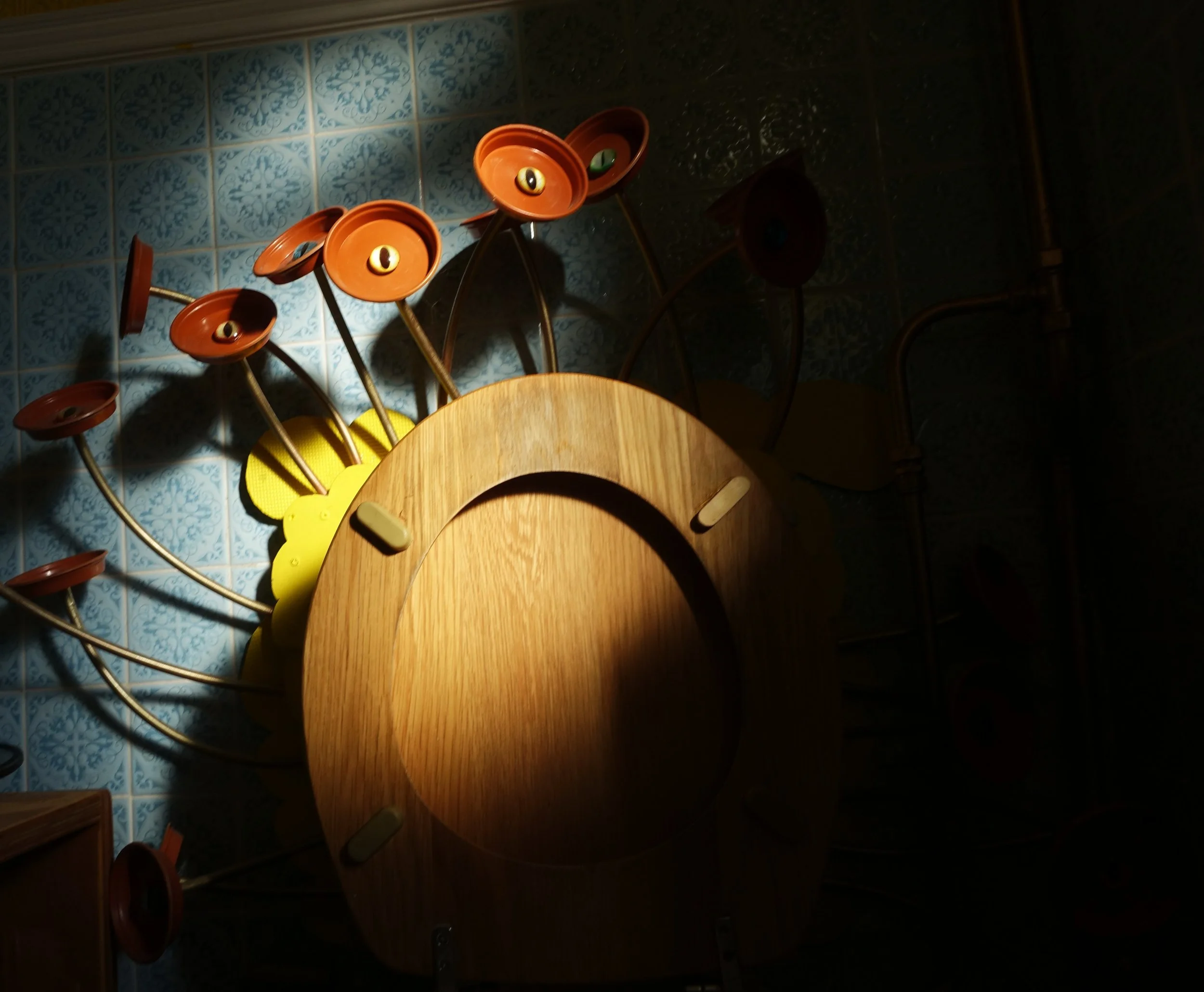
A Sidmouth bathroom.
Airfix model spitfires and a Heinkel bomber float above British Empire cushions in what was once a traditional lounge. I conclude that the cushions are probably stuffed with duck feathers rather than those of gulls, which are a protected species. The Meccano mobile above resembles a steampunk spacecraft. Despite the twentieth-century references, you cannot withdraw to nostalgia here. The future is only a space-hopper leap away. On the bathroom door a man is crashing down to land in Middle-earth. Inside, a row of sinister nail clippers suggests that not everything is well in paradise. David Bowie would have had a field day here. Neil’s house is a trove of memories and light-hearted magic invoking the spirit of Britain.
It makes me wonder if the country has become a gigantic theme park, gently slumbering in the past. Only turning over occasionally to feel the urgency of the digital present pumping towards our eyeballs. The ones and zeros impeding our vision of the future like the snowy effects of an optical migraine. Simulations of the past are everywhere, even in the rapid eye movement of our dreams.
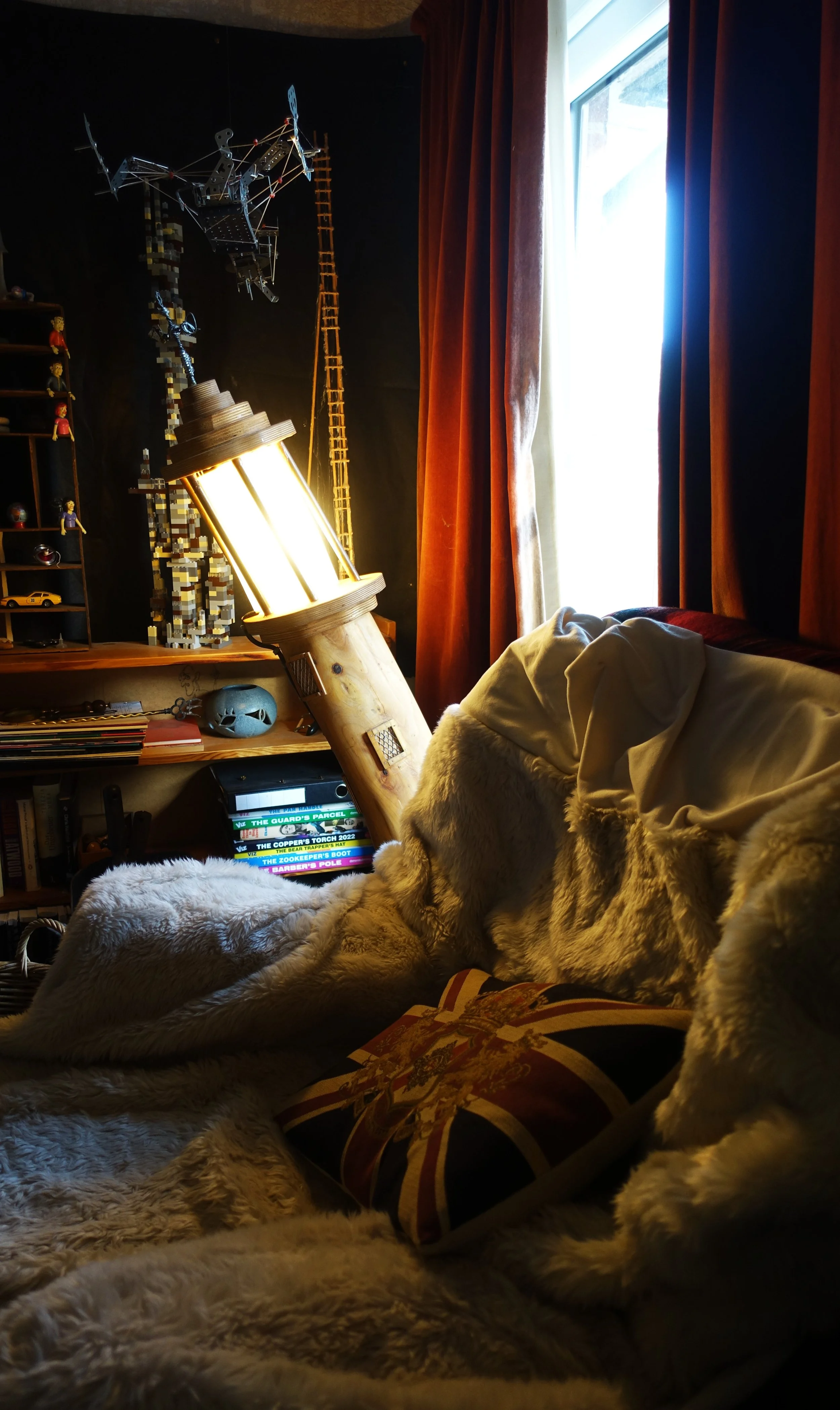
A Sidmouth lounge.
Andy Burnham becomes the nation’s leader during our stay. Six prime ministers in seven years suggests impatience with and within the political class. Also, an unwillingness for the electorate to wake up to the realities of debt and national decline. Is the problem an entitled populace? One preferring to place their hopes in the next pretender rather than grasping the nettles in their own patch. Or is the international billionaire class surreptitiously draining the wealth of UK plc? Many of Bristol’s new graduates hail from the East. One day they will return, undertaking business deals. Will the next century see the UK become a financial colony of India or China? They had better hurry up! American private equity is already buying up the housing market and Premier League football clubs. There is no town crier at the Treasury who can relieve the UK graduates of their debt. The bond markets shout louder than the county fairs.
Fortunately, the countryside offers me solace, although I know that it’s also a manufacturing zone of sorts. There’s enough magic left in the byways and holloways of Devon to persuade me that we should remain optimistic. The River Sid, with its pools and rapids, runs gloriously into Sidmouth. It’s a youthful, dynamic river only six miles long, and we saw several trout waiting for flies, so it’s unlikely to be polluted. Along the banks the greenery still remains green. I persuade myself that Devon’s pattern of fields and hedgerows is the same as when the Hot Pennies tradition started. With time's arrow moving irreversibly towards me, I need to keep my illusions intact as much as the next toast eater.
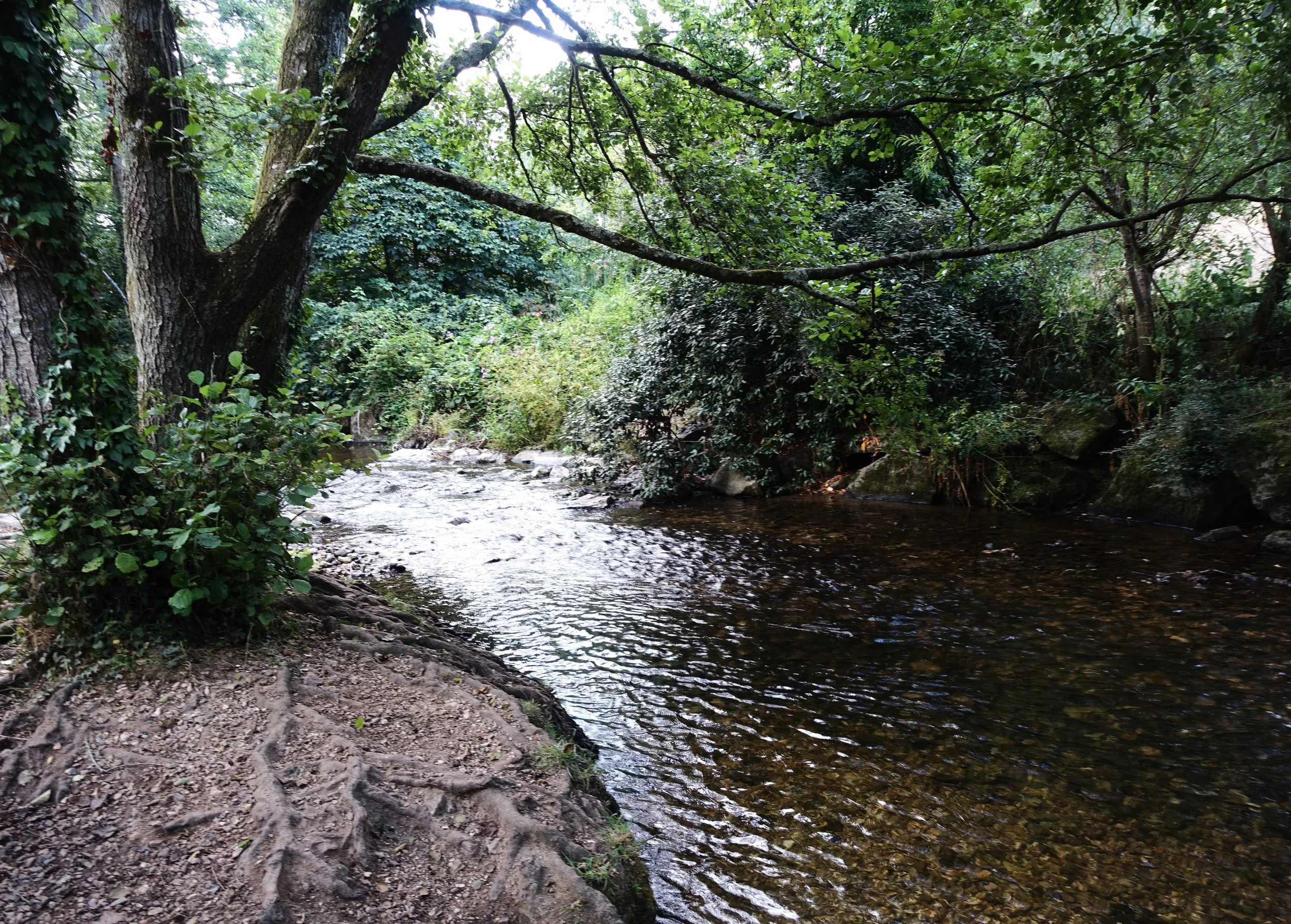
River Sid, Sidmouth.